
Transforming Tonawanda Creek Through Living Shoreline Restoration
Live in the area? Answer this survey
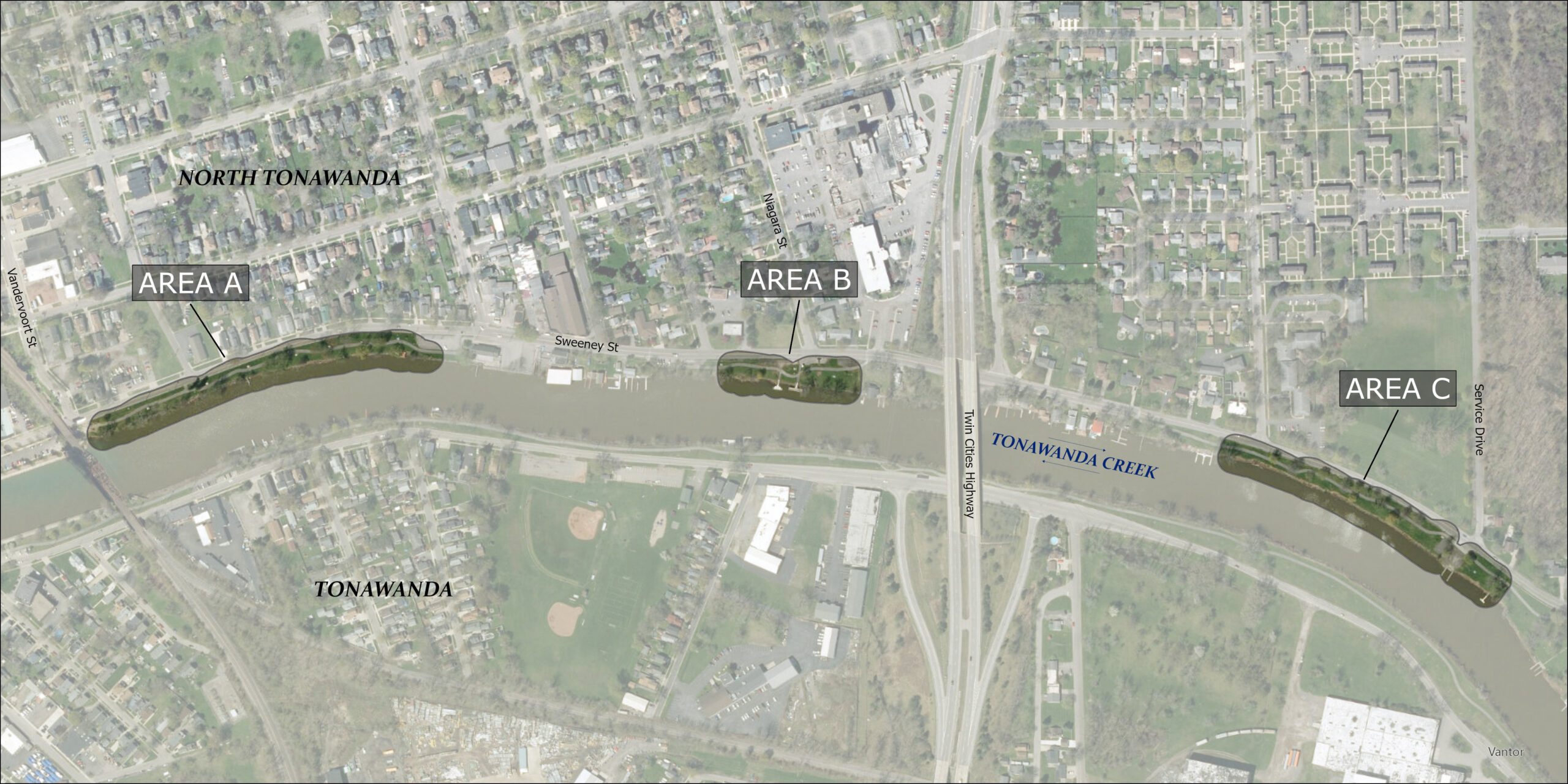
Project location and footprint along Tonawanda Creek in North Tonawanda. Click to view larger image.
Currently in the design and pre-implementation phase, this project will transform approximately 1,500 linear feet of shoreline and 2.3 acres of riparian habitat along Tonawanda Creek within the City of North Tonawanda. Through invasive species management, native plantings, meadow restoration, and reforestation, this project will convert degraded mowed turf shoreline into a resilient, self-sustaining living shoreline system that improves habitat, water quality, and shoreline stability while maintaining public access and sight lines throughout.
Tonawanda Creek
Tonawanda Creek is one of the signature waterways of Western New York, a natural tributary to the Niagara River that also became part of the Erie Canal system, helping shape the growth and identity of communities like North Tonawanda. In the 1800s, canal construction and navigation improvements transformed the creek corridor into a working waterway and regional connector, tying local neighborhoods and industries to a much larger Great Lakes trade network.
Today, Tonawanda Creek remains a heavily used public waterfront for walking, fishing, paddling, and trail recreation, but like many urban waterways, it faces ongoing environmental pressures. Water quality is becoming a bigger concern in the creek, particularly excess nutrients entering the creek from surrounding developed areas, which can fuel harmful algal blooms during warm summer months. Shoreline erosion from heavy boat traffic can further release sediments and trapped nutrients into the water, while deer feeding on vegetation reduces the density of shoreline vegetation that would otherwise help filter runoff, compounding conditions that make algal blooms more likely and more severe.
These challenges are why shoreline restoration matters. By rebuilding native vegetation at the water’s edge, strengthening stream buffers, and restoring diverse habitats, projects like this help Tonawanda Creek become more stable, more resilient to disturbance, and healthier for both wildlife and the community that enjoys it.
Project Area Conditions
Tonawanda Creek, a tributary of the Niagara River, flows through a highly visible public corridor maintained by the City of North Tonawanda. The project area consists of three focal zones (Areas A, B, and C) that currently exhibit degraded riparian conditions.
Across much of the site, mowed turf grass extends to the water’s edge, offering minimal erosion control, limited habitat value, and little stormwater filtration. Invasive species, particularly Phragmites australis, have formed monocultures along sections of shoreline, reducing biodiversity and diminishing ecological value. In some locations, exposed soils and steep banks are contributing to localized erosion.
This project will replace those problem species with thoughtfully selected native plants that maintain sight lines, improve habitat, and create a more beautiful, natural waterfront that people can enjoy year after year.
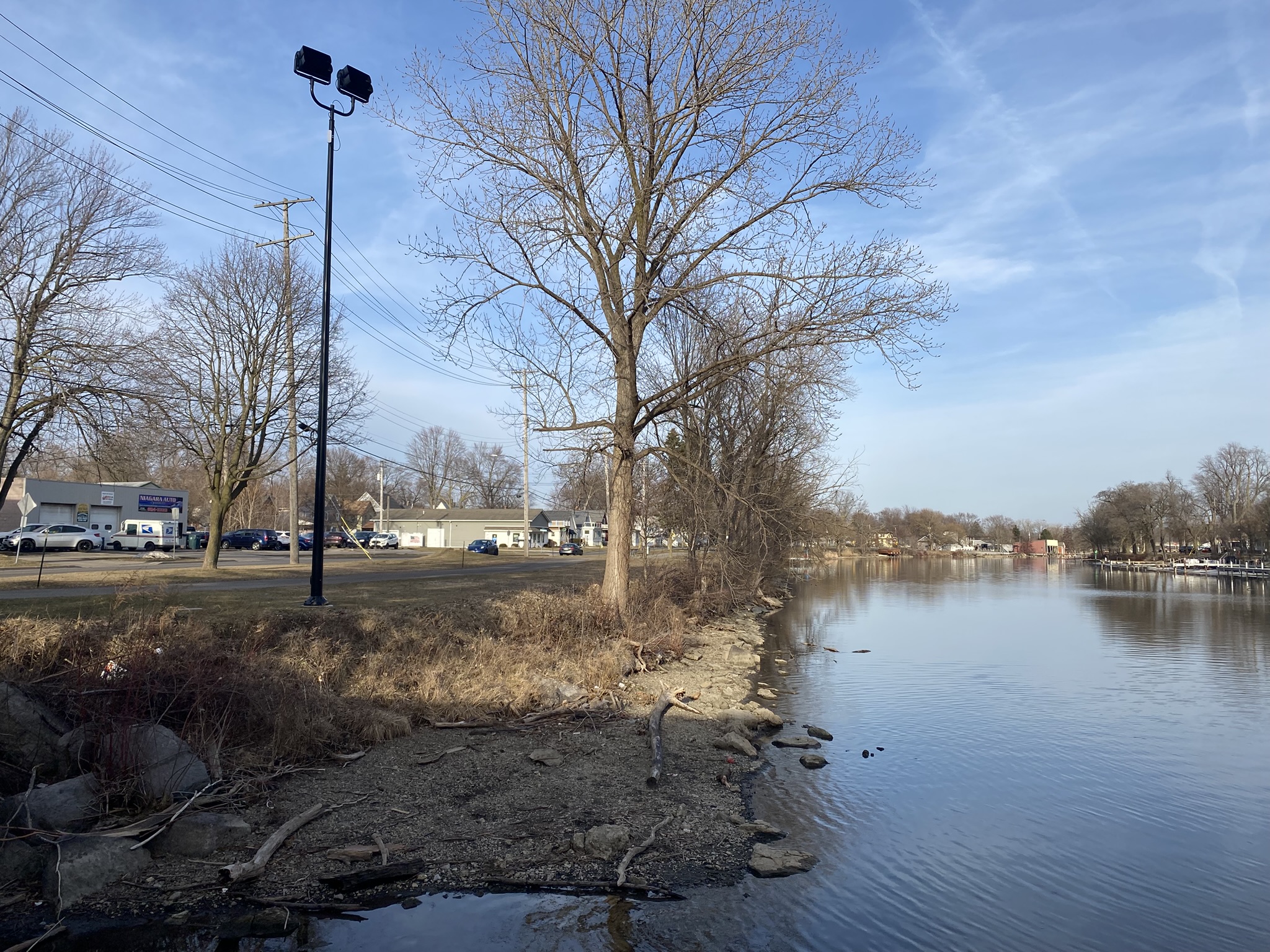
(Area A): Steep shoreline slopes with sparse vegetation and exposed soils contributing to erosion.
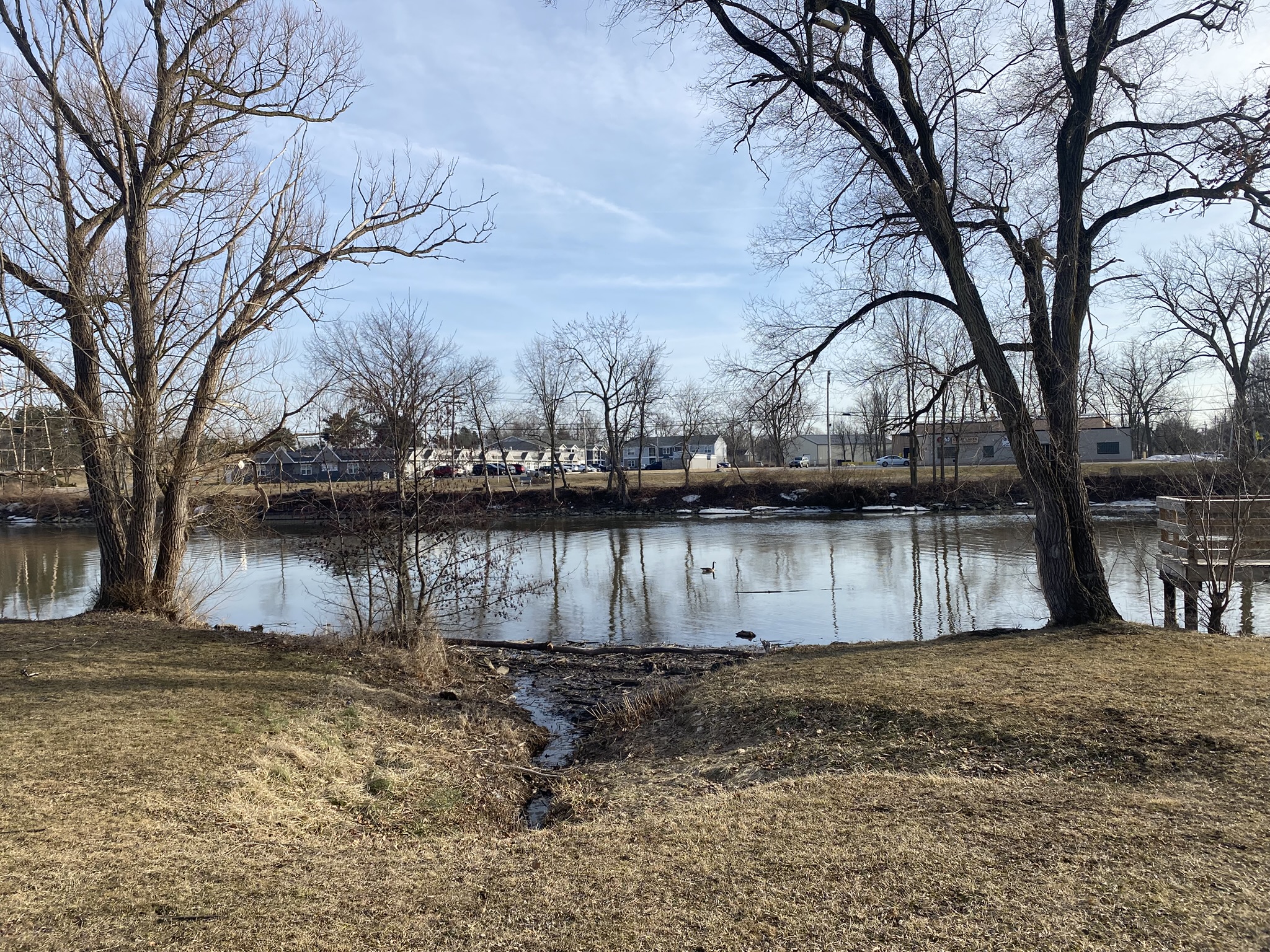
(Area B): Stormwater outfall depression currently devoid of vegetation and prone to debris accumulation and unfiltered water entry into the creek.
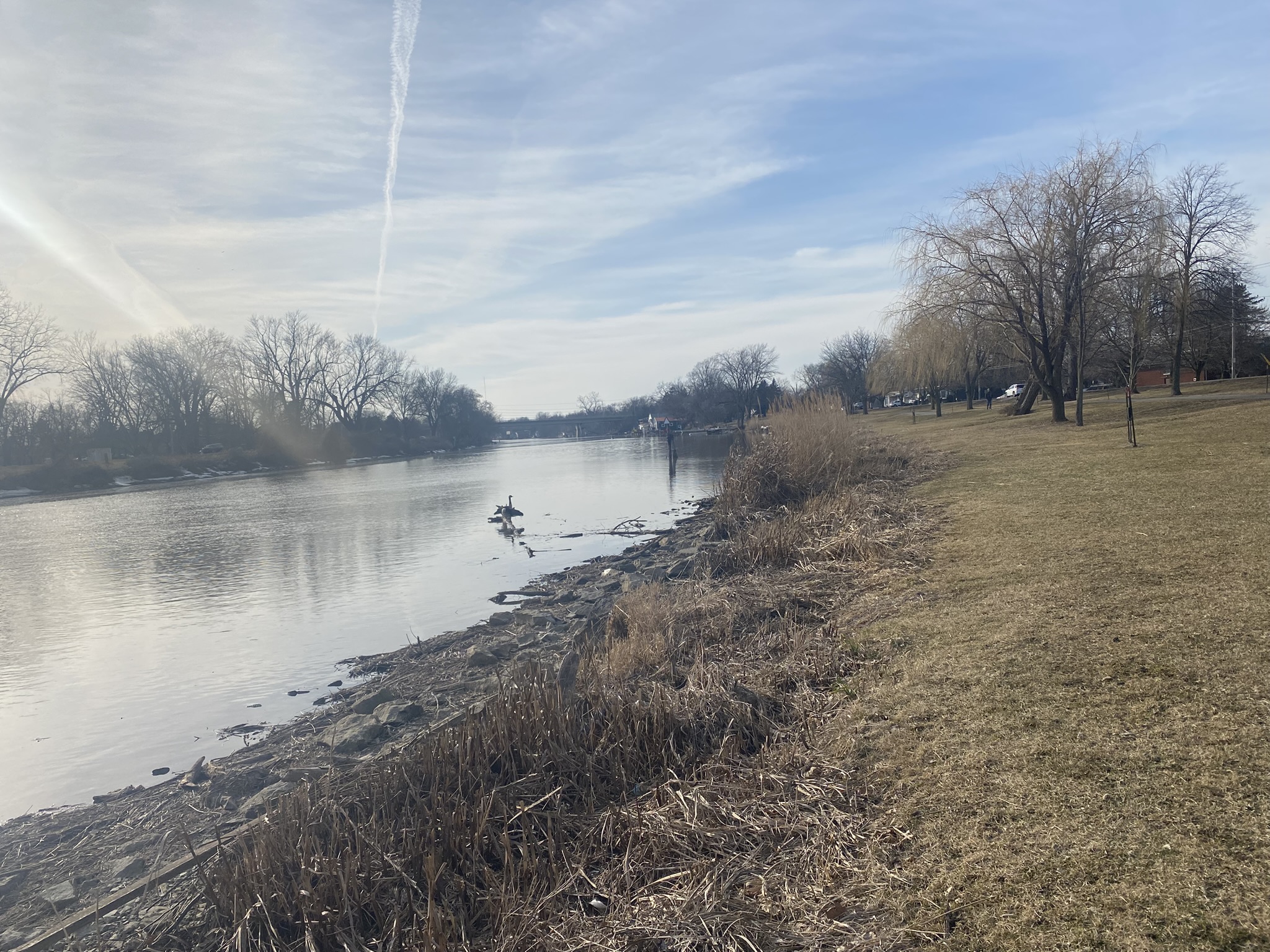
(Area C): Dense Phragmites monoculture brushed up to mowed lawn, limiting native vegetation and reducing available habitat.
Revitalization Efforts
This project is part of Buffalo Niagara Waterkeeper’s Living Shoreline Program, an effort to bring healthier, more natural shorelines back to our local waterways. It supports regional goals to restore habitat, improve water quality, and strengthen the ecological health of the Niagara River and its tributaries for future generations.
The current early stages of planning include:
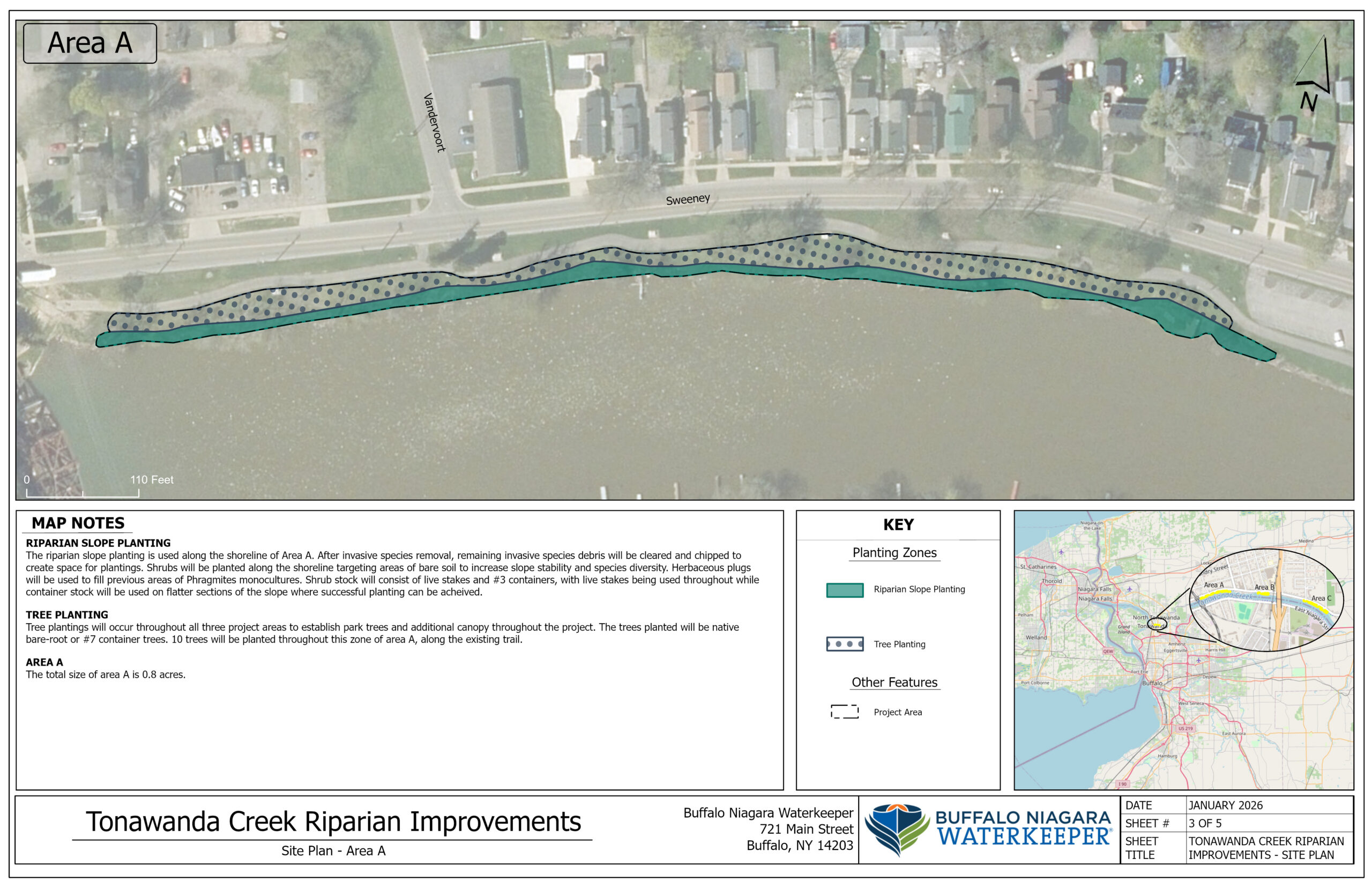
Area A – Riparian Stabilization and Park Re-Tree Effort
Click to view larger image.
- Installation of park trees along the trail corridor
- Native shoreline shrub plantings throughout
- Erosion control through deep-rooted native species
- Improved canopy and habitat connectivity
Area B – Stormwater Meadow Restoration

Click to view larger image.
- Creation of a 6,500 square foot meadow
- Invasive species treatment and lawn-to-meadow conversion
- Park trees planted within adjacent lawn
Area C – Large-Scale Riparian Reforestation & Aquatic Habitat

Click to view larger image.
- Total restoration footprint of 45,000 square feet
- Invasive species treatment and lawn-to-meadow conversion
- Riparian reforestation zone establishment
- Additional park trees within area
- Fenced aquatic plantings for in-water plant establishment
- Creation of designated fishing access features
Restored Conditions
Upon completion, the restored shoreline will become a reimagined space that provides greater habitat, ecosystem and recreational benefits.
- Improve water quality by filtering runoff before it enters Tonawanda Creek
- Reduce erosion through deep-rooted native vegetation
- Replace invasive monocultures with diverse native plant communities
- Provide habitat for birds, pollinators, amphibians, and aquatic species
- Create shaded aquatic habitat that benefits fish populations
- Maintain sight lines and expanded public access along the waterfront
The project will convert degraded turf shoreline into a resilient, self-repairing riparian ecosystem that strengthens over time.
Community Engagement & Education
Public Input During Project Design
Community input is an essential part of this project. Because this stretch of Tonawanda Creek is used daily by nearby residents, walkers, anglers, and park visitors, we want to ensure the reimagined shoreline reflects the needs and values of the people who know it best.
Buffalo Niagara Waterkeeper and the City of North Tonawanda are actively seeking feedback from those who live near and use the project areas. A community survey is currently live, and we encourage residents and visitors to share their thoughts on what they would like to see in these restored spaces, whether that includes habitat features, access considerations, educational elements, or other ideas that enhance the experience along the waterfront. Answer the survey below, or click here.
In addition to the online survey, we are planning an on-site outreach event in Spring 2026 where community members can review preliminary concepts, ask questions, and provide direct input into the final design.
By incorporating community voices early in the process, we aim to create shoreline improvements that strengthen ecological function while supporting the way people already enjoy and connect with Tonawanda Creek.
Partners
Buffalo Niagara Waterkeeper
Project Lead
City of North Tonawanda
Land Manager & Long-Term Steward
NYS Canal Corporation
Landowner
Niagara River Greenway Commission
Funding Partner